
HARMONISE YOUR PRODUCT DATA
Turn fragmented product data into a reusable business asset
Transform data chaos
into real value
CircKit is the data backbone for fashion and footwear brands. We transform scattered product and supply chain data into a clean, trusted source of truth at SKU level, giving every product a usable record that can power compliance, impact tracking and circular growth.
Data readiness is the foundation for everything that follows. By harmonising fragmented product data, we help brands generate the outputs they need across compliance, circularity and design-stage decision-making, all from the same underlying dataset.

*Data-readiness for all commercial, compliance and circular needs*
PREPARE DATA ONCE = POWER EVERY OUTCOME
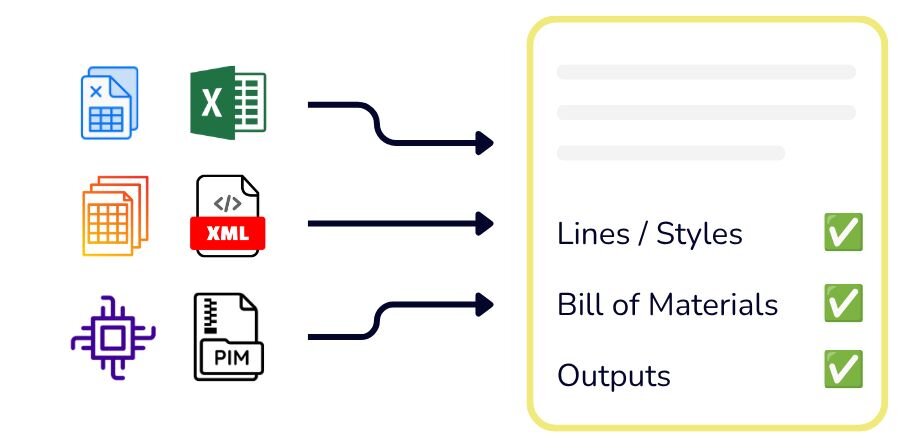
Upload fragmented data in any format, from spreadsheets and supplier files to tech packs, BOMs, PLM and ERP exports, and use one core dataset to support commercial, circular and compliance outputs (i.e. EPR, LCAs, Digital Product Passports and more) without having to rework the data each time.
Spreadsheets
184 columns
XLSX
CSV files
12,482 rows
CSV
PDF documents
38 pages
PIM / PLM / ERP
Product data
PIM
Data Engine
Living Catalogue

Hoodie Mens AW28
Bill of Materials, Suppliers
Outputs

Sneakers Vent Runners
Bill of Materials, Suppliers
Outputs
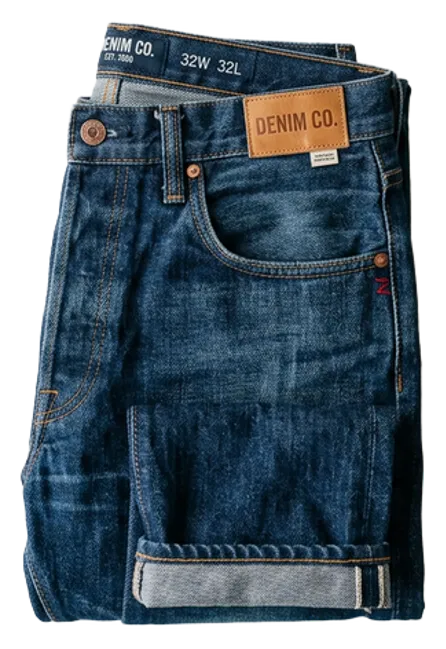
Wide-leg Silhouette Jeans
Bill of Materials, Suppliers
Outputs


WORK SMARTER,
NOT HARDER
For most brands, the hardest part is not the outputs itself, it is assembling and structuring the product and supply chain data needed to produce it.
That information often exists across disconnected systems, internal files, supplier documents and team knowledge. It was not originally structured to support environmental, compliance or circularity outcomes or strategy, which means every new requirement creates another round of manual collation and validation.
CircKit solves that by ingesting structured and unstructured inputs and turning them into a clean product-level record that teams can reuse across business use cases. Think of it as your living catalogue!
Once your core data is harmonised, the
same underlying dataset can power:
Data Harmonisation
Prepare Data Once = Power Every Outcome
Upload scattered data in any format - spreadsheets, supplier declarations, PLM/ERP exports - to turn fragmented records into a single source of truth. CircKit cleanses, harmonises, and links your bills of materials to create an audit-ready, unit-level product record for every SKU. By establishing this permanent product data asset once, every team works from verified numbers, eliminating repetitive tasks, reducing operational overheads, and powering all downstream compliance modules seamlessly.
Data Harmonisation
Upload scattered data in any format - spreadsheets, supplier declarations, PLM/ERP exports - to turn fragmented records into a single source of truth. CircKit cleanses, harmonises, and links your bills of materials to create an audit-ready, unit-level product record for every SKU. By establishing this permanent product data asset once, every team works from verified numbers, eliminating repetitive tasks, reducing operational overheads, and powering all downstream compliance modules seamlessly.
Life Cycle Assessments (LCAs)
Move beyond slow, sample-based estimates to portfolio-wide SKU coverage in minutes rather than months. CircKit automates ISO 14040/44 and PEFCR-aligned lifecycle assessments directly from your harmonised product records. By replacing expensive manual consultancy cycles with instant, audit-ready impact calculations across entire ranges, teams reduce ESG and CSR reporting timelines by up to 80% and lower cost per SKU by up to 99%, delivering actionable product data when it still matters.
Automate portfolio-wide, audit-ready LCAs in minutes, cutting reporting timescales by 80% and cost per SKU by 99%.
EcoDesign
Aligned with ESPR requirements, empower design, buying, and sourcing teams to evaluate materials and garment constructions before production begins. Model how every fibre blend and component selection impacts carbon, durability, and end-of-life viability alongside product cost. By surfacing real-time trade-offs at concept stage, teams can engineer collections that systematically capture EPR eco-modulation bonuses, hit corporate reduction targets, and protect retail margins.
Engineer compliant, low-impact ranges at design stage, before production and sampling, to protect margins and maximise EPR fee bonuses.
Textiles EPR Optimisation
Model SKU-level EPR fees, identify eco-modulation bonuses and flag potential penalties while design and sourcing choices can still change. See each product’s true cost beyond intake margin. Reuse product data across markets, link certifications and evidence, and export submission-ready filings, for Refashion in France, and emerging schemes across EU and North America.
Unlock eco-modulation and protect margin with lower EPR fees, evidence-backed bonus claims, and optimised filings across markets.
French Eco Score (Coût Environnemental)
Calculate and publish your French Eco Score (Coût Environnemental). Built on the Ecobalyse framework, officially assessed and approved by ADEME and EY. See what drives each score, flag missing data and refine inputs before publishing. Give customers a clearer picture of your products’ environmental impact and avoid the risk of 3rd-party scores based on 'worst case' defaults.
Publish accurate scores grounded in your product data, not third-party assumptions, ensuring seamless market access and verified consumer labelling.
Digital Product Passports (DPPs)
Generate ESPR-ready DPPs by linking composition, batch-level manufacturing, environmental impacts, and end-of-life options in secure traceable digital identity for every SKU. Deploy scannable GS1-aligned QR codes onto physical care labels and POS ecommerce widgets to satisfy ESPR rules, and unlock direct customer engagement through verified product journeys.
Launch verified supply chain transparency, materials origin data, and end-of-life care instructions to regulators, stockists and customers.
Targets and Reporting
Set, monitor, and deliver ESG and climate targets at brand, category, or product level with live feedback. Replace retrospective insights delayed by 12-24 months with real-time analytics during design-stage and range planning. Pinpoint material PEFCR hotspots, forecast EPR cost liabilities, and optimise sourcing before issuing purchase orders. Confidently meet CSRD and corporate disclosure mandates while steering every range to hit margin and sustainability targets simultaneously.
Move from delayed historical reporting to proactive range planning that hits sustainability targets and protects margin before production.
Performance + Sustainability
Centralise physical testing alongside your product records to balance durability, cost, and environmental footprint. Integrate tests - e.g. SATRA, Martindale abrasion, tear strength, pilling, and wash stability - directly with PEFCR impact scores and intake margins. This unified view enables teams to evaluate novel material innovations against rigorous ESPR durability rules, prevent costly product returns, and verify commercial viability before commercialisation.
Evaluate material innovations across durability, impact, and cost to meet ESPR standards and reduce return rates.
ReLife Circular Pathways
Design every product for multiple lives, planning for resale, rental, repair and fibre-to-fibre recycling from the start. Use product data to assess suitable pathways and build circular opportunities into your ranges before production. Connect with circularity platforms and partners to put those plans into action, extend product life and recover value after the first sale. Turn end-of-life planning into opportunities for new revenue, repeat customer engagement and less textile waste.
Design value beyond the first sale through profitable secondary revenue streams within the $560B circular economy.
Green Claims
Turn product data into clear, evidence-backed marketing claims and consumer-facing proof points. Link each claim to supporting impact calculations, certifications and product records, then share through ecommerce widgets and digital touchpoints. Give marketing, sustainability and legal teams a shared evidence base to review claims before publication. Support alignment with ECGT / EmpCo requirements, reduce greenwashing risk and help customers understand the evidence behind your messaging.
Show the evidence behind your claims, build customer trust and reduce greenwashing risk without slowing marketing down.
Traceability (Clothing Connected)
Map suppliers, facilities, material origins and certifications across supply chain tiers. Spot risks earlier, compare supplier performance and uncover shared materials across brands and seasons to consolidate purchasing. Through Clothing Connected, turn visibility into sourcing opportunities, with illustrative 12–18% material cost reductions and 4–6 weeks faster sourcing, depending on supply base and data maturity.
Delivers verifiable chain-of-custody, facility auditing, and tier-1 to tier-4 transparency required for global trade compliance.
WHAT YOU GET:
- A clean product-level record for every SKU
- Granular BOM and composition visibility
- Supply chain data connected to the product
- One shared dataset across teams
- An actionable foundation for compliance, impact and circular workflows
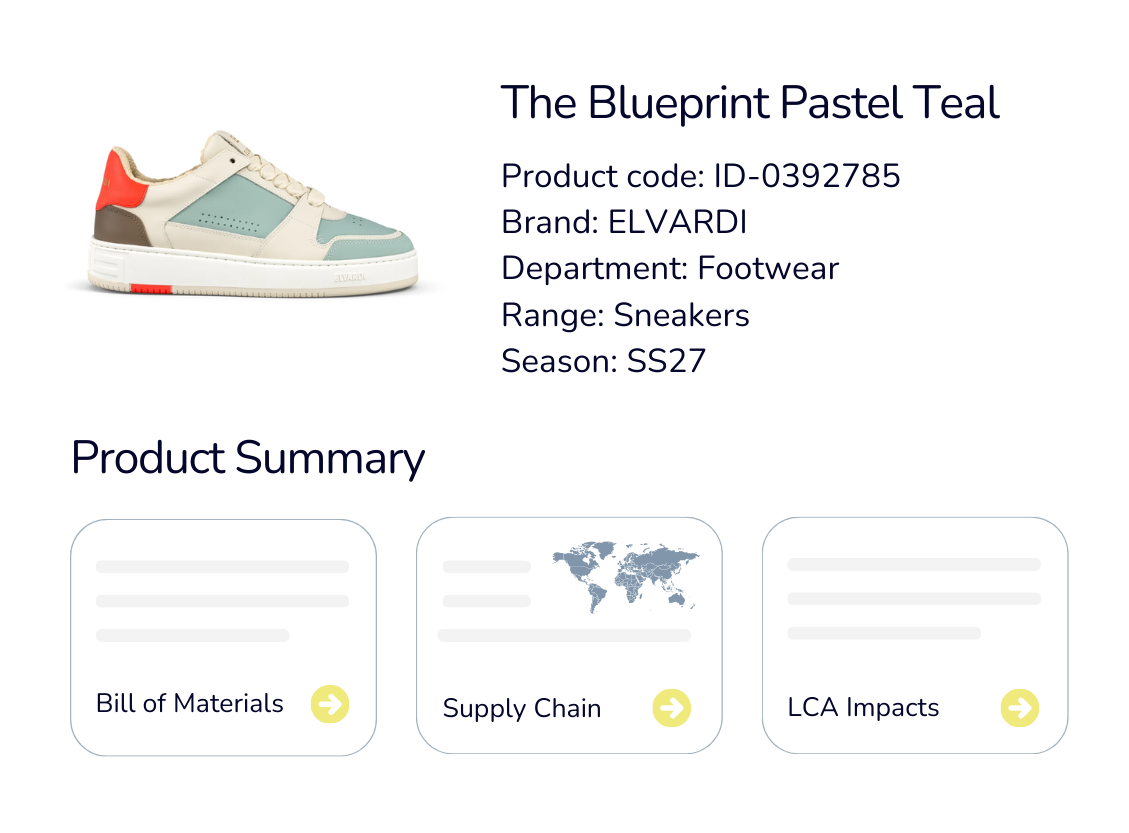
- Product records that power multiple outputs from the same core data, including, LCAs, EPR, DPPs, etc.
Built around your reality - don’t wait for perfect!
CircKit is designed to work with the data you already have, including spreadsheets, supplier declarations, tech packs, BOMs, PLM exports, ERP data and traceability inputs. You don’t need perfect data to start. Where information is missing, CircKit can flag gaps and, where appropriate, use declared proxies until better primary data becomes available.
Better foundations for better outcomes
When product data is easier to find, validate and reuse, brands can respond faster to commercial and regulatory requirements. Instead of sustainability becoming another manual layer of work, the product data itself becomes organised, reusable and more valuable across the business. That is what data harmonisation enables: not just better outputs, but stronger business capability.
DON’T BUILD A DATASET FOR ONE DEADLINE,
BUILD A BUSINESS ASSET.
Harmonise your product data once, then use it across regulation readiness, impact, circularity and business strategy. Use your existing data to its full potential with CircKit. Fill out the form below to chat with our client success team.
Chat to us...