

DRIVE PROFITS WITH
FASHION COMPLIANCE
ECO-MODULATION
CLIMATE ACTION
YOUR DESIGN DATA
No more guesswork, or retrospective insights. Your existing data is your new immediate commercial advantage.
Automate
Comply
Grow


Trusted by


TRANSFORM 'DATA CHAOS' INTO REAL VALUE
Prepare data once = power every outcome
Data Harmonisation
Prepare Data Once = Power Every Outcome
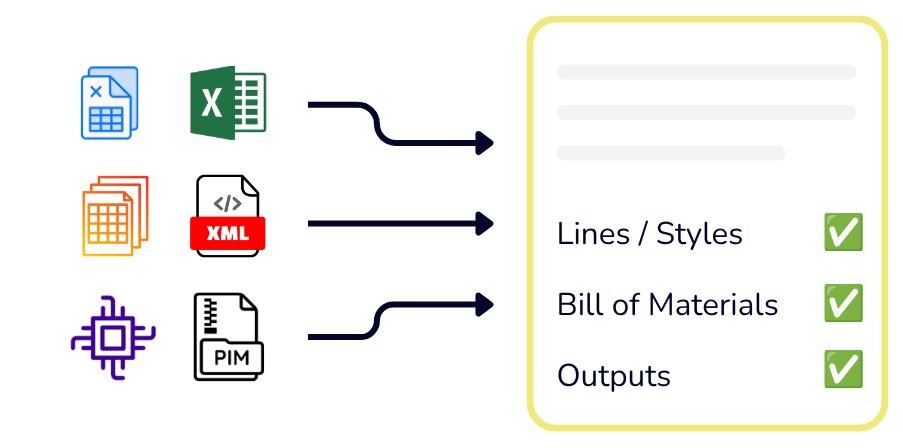
Upload scattered data in any format - spreadsheets, supplier declarations, PLM/ERP exports - to turn fragmented records into a single source of truth. CircKit cleanses, harmonises, and links your bills of materials to create an audit-ready, unit-level product record for every SKU. By establishing this permanent product data asset once, every team works from verified numbers, eliminating repetitive tasks, reducing operational overheads, and powering all downstream compliance modules seamlessly.
Data Harmonisation
Upload scattered data in any format - spreadsheets, supplier declarations, PLM/ERP exports - to turn fragmented records into a single source of truth. CircKit cleanses, harmonises, and links your bills of materials to create an audit-ready, unit-level product record for every SKU. By establishing this permanent product data asset once, every team works from verified numbers, eliminating repetitive tasks, reducing operational overheads, and powering all downstream compliance modules seamlessly.
Life Cycle Assessments (LCAs)
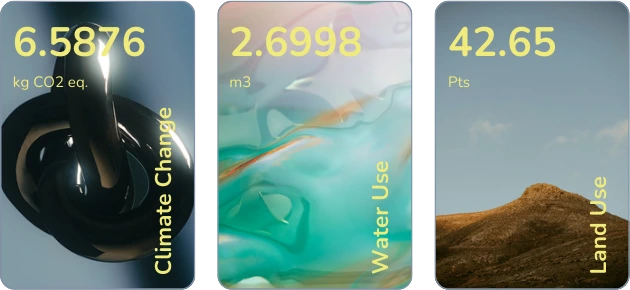
Move beyond slow, sample-based estimates to portfolio-wide SKU coverage in minutes rather than months. CircKit automates ISO 14040/44 and PEFCR-aligned lifecycle assessments directly from your harmonised product records. By replacing expensive manual consultancy cycles with instant, audit-ready impact calculations across entire ranges, teams reduce ESG and CSR reporting timelines by up to 80% and lower cost per SKU by up to 99%, delivering actionable product data when it still matters.
Automate portfolio-wide, audit-ready LCAs in minutes, cutting reporting timescales by 80% and cost per SKU by 99%.
EcoDesign
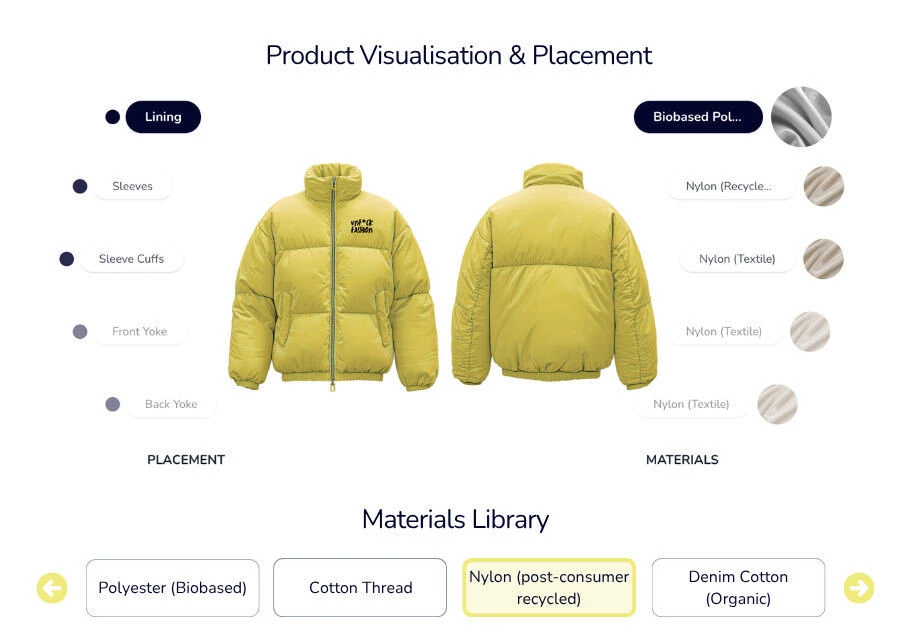
Aligned with ESPR requirements, empower design, buying, and sourcing teams to evaluate materials and garment constructions before production begins. Model how every fibre blend and component selection impacts carbon, durability, and end-of-life viability alongside product cost. By surfacing real-time trade-offs at concept stage, teams can engineer collections that systematically capture EPR eco-modulation bonuses, hit corporate reduction targets, and protect retail margins.
Engineer compliant, low-impact ranges at design stage, before production and sampling, to protect margins and maximise EPR fee bonuses.
Textiles EPR Optimisation
Model SKU-level EPR fees, identify eco-modulation bonuses and flag potential penalties while design and sourcing choices can still change. See each product’s true cost beyond intake margin. Reuse product data across markets, link certifications and evidence, and export submission-ready filings, for Refashion in France, and emerging schemes across EU and North America.
Unlock eco-modulation and protect margin with lower EPR fees, evidence-backed bonus claims, and optimised filings across markets.
French Eco Score (Coût Environnemental)
Calculate and publish your French Eco Score (Coût Environnemental). Built on the Ecobalyse framework, officially assessed and approved by ADEME and EY. See what drives each score, flag missing data and refine inputs before publishing. Give customers a clearer picture of your products’ environmental impact and avoid the risk of 3rd-party scores based on 'worst case' defaults.
Publish accurate scores grounded in your product data, not third-party assumptions, ensuring seamless market access and verified consumer labelling.
Digital Product Passports (DPPs)
Generate ESPR-ready DPPs by linking composition, batch-level manufacturing, environmental impacts, and end-of-life options in secure traceable digital identity for every SKU. Deploy scannable GS1-aligned QR codes onto physical care labels and POS ecommerce widgets to satisfy ESPR rules, and unlock direct customer engagement through verified product journeys.
Launch verified supply chain transparency, materials origin data, and end-of-life care instructions to regulators, stockists and customers.
Targets and Reporting
Set, monitor, and deliver ESG and climate targets at brand, category, or product level with live feedback. Replace retrospective insights delayed by 12-24 months with real-time analytics during design-stage and range planning. Pinpoint material PEFCR hotspots, forecast EPR cost liabilities, and optimise sourcing before issuing purchase orders. Confidently meet CSRD and corporate disclosure mandates while steering every range to hit margin and sustainability targets simultaneously.
Move from delayed historical reporting to proactive range planning that hits sustainability targets and protects margin before production.
Performance + Sustainability
Centralise physical testing alongside your product records to balance durability, cost, and environmental footprint. Integrate tests - e.g. SATRA, Martindale abrasion, tear strength, pilling, and wash stability - directly with PEFCR impact scores and intake margins. This unified view enables teams to evaluate novel material innovations against rigorous ESPR durability rules, prevent costly product returns, and verify commercial viability before commercialisation.
Evaluate material innovations across durability, impact, and cost to meet ESPR standards and reduce return rates.
ReLife Circular Pathways
Design every product for multiple lives, planning for resale, rental, repair and fibre-to-fibre recycling from the start. Use product data to assess suitable pathways and build circular opportunities into your ranges before production. Connect with circularity platforms and partners to put those plans into action, extend product life and recover value after the first sale. Turn end-of-life planning into opportunities for new revenue, repeat customer engagement and less textile waste.
Design value beyond the first sale through profitable secondary revenue streams within the $560B circular economy.
Green Claims
Turn product data into clear, evidence-backed marketing claims and consumer-facing proof points. Link each claim to supporting impact calculations, certifications and product records, then share through ecommerce widgets and digital touchpoints. Give marketing, sustainability and legal teams a shared evidence base to review claims before publication. Support alignment with ECGT / EmpCo requirements, reduce greenwashing risk and help customers understand the evidence behind your messaging.
Show the evidence behind your claims, build customer trust and reduce greenwashing risk without slowing marketing down.
Traceability (Clothing Connected)
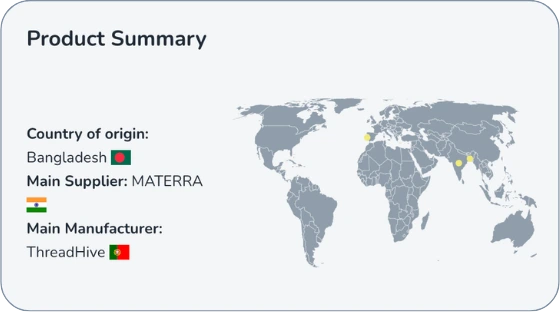
Map suppliers, facilities, material origins and certifications across supply chain tiers. Spot risks earlier, compare supplier performance and uncover shared materials across brands and seasons to consolidate purchasing. Through Clothing Connected, turn visibility into sourcing opportunities, with illustrative 12–18% material cost reductions and 4–6 weeks faster sourcing, depending on supply base and data maturity.
Delivers verifiable chain-of-custody, facility auditing, and tier-1 to tier-4 transparency required for global trade compliance.

Harmonise your data and leverage real-time environmental and compliance data to:
✓ reduce mandated reporting time-scales by up to 80%
✓ optimise eco-modulated EPR textiles fees by up to 100%, and
✓ design circular products that are ready for lucrative end-of-life pathways.
Design-stage intelligence, to add value where you need it...
Embed vital post-production insights into the design phase, eliminating guesswork and driving real value.
Design-stage intelligence, to add value where you need it...
Embed vital post-production insights into the design phase, eliminating guesswork and driving real value.
...and get ahead of new
regulation as well!
Transform compliance from a financial risk into a margin growth driver, and lever for commercial advantage.
Between 2026 and 2030, a wave of new textile and fashion regulation lands across the EU, UK, and North America.
Deadlines stack up year after year - but the good news is that the same data foundation powers many of the directives. This means by preparing your data once, each deadline becomes a milestone you've already hit - not a fire you have to put out.
Deadlines are live
2026
2027
2028
2029
2030
...and to get ahead of new regulation as well!
EPR
DPPs
PEFCR
ESPR
Transform compliance from a financial risk into a growth accelerator.

Unlock profitability aligned with positive climate action1
Protect your profits2 against climate volatility, by lowering costs, increasing revenue, and improving resilience.3
1The fashion industry is heading for a 34% drop in profits by 2030 unless companies move quickly to rein in their climate footprint.
Apparel Impact Institute
2Textile EPR could erode net profit by around 4% by 2030 for large brands, driven by a potential 1.1% increase in cost of goods sold.
Global Fashion CFO Agenda
3While circular models first emerged to boost sustainability, leadership are finding that they improve resilience, increase revenue, and lower costs.
Bain & Company
A transformation towards circular textile business models could generate $700 billion in economic value by 2030.
United Nations Environment Programme

CircKit supports brands across 30 countries on 3 continents, giving you a proven, global‑ready compliance and circularity playbook from day one.

>
%
Brands cut team resource load of reporting by over 80%, freeing teams from ‘data chaos’ to focus on strategy, not admin.

.
%
99.96% alignment* with gold‑standard manual lifecycle assessments, so you can report with consultant‑grade confidence, and a ≈99% cost reduction.
*Mean Absolute Percentage Deviation (MAPD) of just 0.04% against PEF ±10% margin

x
Brands unlock up to 500% Return on Investment (ROI) on EPR fees using eco-modulation, turning a rising cost line into recurring savings.
CircKit supports brands across 30 countries on 3 continents, giving you a proven, global‑ready compliance and circularity playbook from day one.
Brands cut team resource load of reporting by over 80%, freeing teams from ‘data chaos’ to focus on strategy, not admin.
99.96% alignment* with gold‑standard manual lifecycle assessments, so you can report with consultant‑grade confidence, and a ≈99% cost reduction.
*Mean Absolute Percentage Deviation (MAPD) of just 0.04% against PEF ±10% margin
Brands unlock up to 500% Return on Investment (ROI) on EPR fees using textile EPR eco-modulation, turning a rising cost line into recurring savings.
Audit-ready alignment to global reporting and sustainability standards:


WORD ON THE STREET 💬
Our community is growing. Real feedback from fashion and footwear specialists unlocking the power of circular growth and data-led design.
"Fashion needs disruption and innovation, and the winners will be the brands who move first and pioneer- and CircKit is the platform to help brands do this and unlock the commercial advantages of circularity."

Simon Platts

ASOS Responsible Sourcing & ESG Director, and Next Group PLC
"[CircKit is] what the future of fashion could actually look like if we stop guessing and start measuring... the team aren’t just building tools, they’re building an entirely different mindset."

Kemi Gbadebo

Founder Designer, GBADEBO
"CircKit is building an innovative platform that will enable a growing, resilient and sustainable fashion economy through the adoption of circularity at scale. I am proud to be an early investor and advisor."

Dr. Pavan Manocha
Industrial Associate, IfM, University of Cambridge, and Silicon Valley VC
"[CircKit is] Everything the industry 'standard metrics platform' should be, but isn't. Working with real-time high accuracy lifecycle data rather than aggregated metrics."

Paul Foulkes-Arellano
Circular Growth Consultant and Author of ‘Materials & Sustainability
"CircKit are bringing something that is long overdue, empowering businesses to navigate compliance requirements while driving commercial growth through smarter, more efficient solutions."

Sarah Foster
Former CEO of Beyondly, the UK's leading ESG compliance consultancy
"Within our Schools curricula at De Montfort University, CircKit allows us to bring Life Cycle Assessment into the heart of teaching, giving students a practical way to understand and act on sustainability."

Stuart Lawson
MA RCA, SFHEA, FRSA | Deputy Head | School of Design Innovation | Associate Professor, Design
YOUR BURNING QUESTIONS
We're not sure we have the budget yet, is there a clear ROI?
Our vendor onboarding process is long and complex. Is it worth starting?
Who should own this internally?
Our teams are at capacity. How can we possibly take on another tool?
Don't we need to prepare our data & systems before adding a new platform?
Our sustainability / circularity strategy isn’t fully defined yet. Are we too early?
We already have tools for LCA, carbon or traceability. Will CircKit just add complexity?
I don’t think we have enough data to use CircKit, is that a blocker?
As seen in